
Tech
The Impact of Automation on the Agricultural Equipment Industry

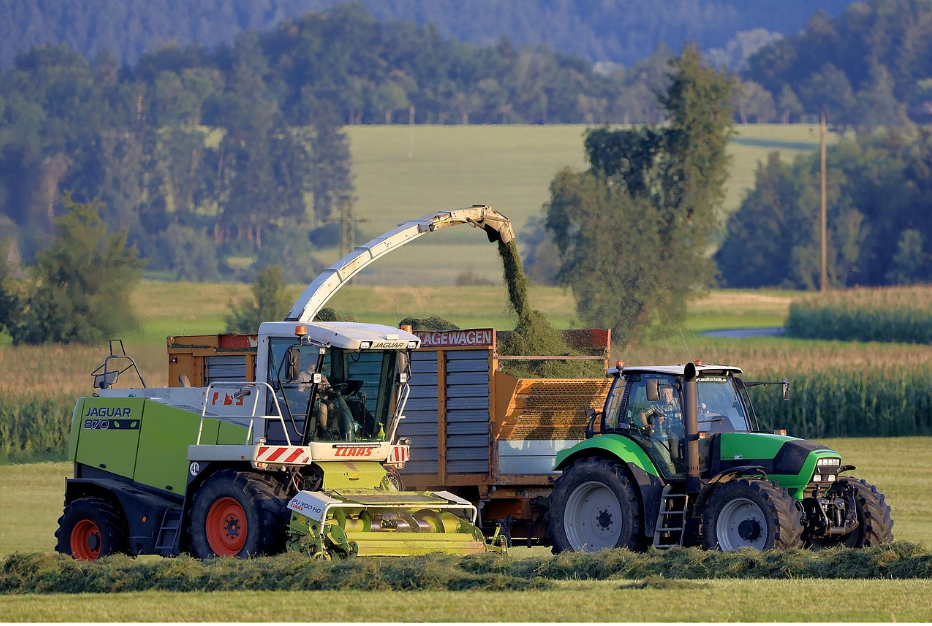
You want to know what is really shifting the agricultural equipment industry right now?
Automation. Automated technology is changing the way farmers across the country, and the world, operate. Self-driving tractors and AI-based harvesters are not just pipe dreams anymore. Automated agriculture is opening up huge opportunities for all levels of the supply chain.
Here’s the thing…
Agricultural equipment is a booming industry, and it isn’t going to slow down any time soon.
Now, you may be wondering:
What is driving that growth?
Who is driving that growth?
How is that growth impacting agricultural equipment dealerships and farmers?
And what exactly does that growth look like in terms of actual numbers?
In this article, we’re going to dig into each of these questions in turn. As you’ll see, the rise of automated technology in agriculture is having an industry-wide impact.
You’ll learn about:
- How automation is fueling industry growth
- The labor crisis driving equipment automation
- How agricultural equipment dealerships are adapting to changes in the industry
- Key technologies behind the automation trend in agricultural equipment
How Automation Is Fueling Industry Growth
Look at the numbers:
The global agriculture equipment market is estimated to grow from $207.21 billion in 2025 to $344.73 billion by 2032, rising at a CAGR of 7.5% in the forecast period. What is also important is that growth expectations are actually increasing faster than before. A 2021 study estimated that market size would top out at just $321 billion by 2030.
That’s pretty impressive growth.
But here’s the real kicker…
Farmers need to do more and more with less and less labor. The farms with the most growth potential need equipment that can handle ever-larger workloads without any proportional increase in the human workforce. This fact is driving manufacturers to start putting more and more automation into their equipment offerings.
Farmers won’t be happy with lower-capacity equipment that requires more workers.
The autonomous farm equipment market segment is growing even faster.
Analysts are projecting that the market for autonomous farm equipment will grow from $78.3 billion in 2024 to $232.1 billion by 2035, which is a CAGR of 10.3%.
The segment itself isn’t really new, either. Tractors have been rolling around fields automatically for years. Equipment equipped with GPS-guided steering systems is already commonplace.
Point is, there are important trends that any agricultural equipment dealership needs to be aware of right now.
Farmers need equipment that can produce more with less, and that equipment has to be more automated and tech-enabled.
Whether you’re looking for farm equipment or advanced automated solutions, dealerships are playing an increasingly important role in this trend.
The actual equipment that you’re going to see sitting around on lots in 2024 looks a lot different than it did ten years ago.
The Labor Crisis Fueling This Change
Here’s another thing…
There’s a labor crisis in agriculture, and it’s getting worse every year.
Look at this stat:
56% of farmers report labor shortages impacting their businesses and ability to be profitable, and that percentage is getting higher and higher every year.
The agricultural equipment market in general is growing. But within that market, the growth for automated agricultural equipment is growing exponentially.
How do we know this?
Simple:
- Less farm labor = more need for equipment that can operate with less human oversight
- Rising labor costs = more economic incentive to invest in labor-saving automation
- Seasonal farm labor is down ~15% since 2020
- Competition for labor across industries makes hiring a constant uphill battle for farms
The writing is on the wall: farms that don’t get on board with automation are going to be left in the dust, while those that invest in automated equipment are going to reap significant competitive advantages.
Let’s use a real-world example to illustrate how big of an impact this is actually having:
When a farmer can’t find a full team of workers for harvest season, that farmer either loses money (harvests go unharvested), or pays workers overtime to get the work done (costs more money). With automated harvesters and other smart equipment, those operations keep moving forward regardless of how many people are available to work.
On a macro level, we’re talking about hundreds of thousands of farms that make real, measurable use of equipment automation every year. As more farmers look to get on board, the equipment market for farms is only going to keep growing.
The question, of course, becomes: where does that growth come from?
Where is all of that new market demand actually coming from?
The easy answer to that question is the fact that the U.S. has been in a multi-year farm labor crisis.
The more complex answer involves supply chains and competition and yield optimizations and price pressures.
Either way, here’s the bottom line: When farmers are seeing labor constraints limiting their capacity to generate profits, those same farmers start looking at solutions, and automated equipment solutions are one of the things that they look at.
How Agricultural Equipment Dealerships Are Adapting
Here’s another area where this all plays out:
Agricultural equipment dealerships.
Agricultural equipment dealerships are having to adapt to this sea change in terms of technology.
There are several key shifts taking place:
- Service offerings are expanding
- Inventory is changing
- Technician skill sets are changing
- Customer relationships are changing
When all of that is taken into account, what you have is an entirely different role for agricultural equipment dealerships than what we’ve seen in the past.
These dealerships used to be about just offering agricultural equipment, but now they’re about helping farmers make informed decisions about how they can effectively and intelligently integrate new technology into their operations.
It’s a critical partner role, and dealerships that figure out how to get on board with that are going to be in great shape.
Key Technologies Behind the Automation Trend in Agricultural Equipment
It all starts with technology.
Here are some of the key technologies behind the agricultural equipment automation trend:
- GPS and precision guidance systems
- Autonomous vehicles
- Robotic harvesters
- Smart sensors and IoT (internet of things)
- AI and machine learning
Each one of those things represents a new and important technology trend.
We’ll touch on them here briefly.
GPS systems allow tractors to stay on the exact same path as they follow the field. Precision technology reduces overlap and waste and improves efficiency. As many as 68% of large-scale crop farms use precision agriculture technologies.
But only 27% of all farms have adopted those practices.
Look at the gap there.
GPS and precision agriculture technology is just one part of this picture.
We also have autonomous tractors and other farm vehicles that are no longer science fiction. They are available right now.
Artificial intelligence and machine learning systems make that possible.
These systems are in constant communication with each other, using all the collected data to make real-time calculations that guide these machines with a precision that was previously unavailable.
Smart sensors and connected tech are driving this movement, too. Connected sensors that monitor all sorts of factors, including soil conditions, can be used to collect data about equipment conditions. That information can then be fed back into these central systems to be used in conjunction with other data.
AI can then help to organize, interpret, and make sense of all of that data.
Wrapping It All Up
There you have it.
Automation is a big deal.
The good news for farmers is that there are various government incentives in place for the adoption of climate-smart agricultural practices, and many of those practices include the use of automated equipment and other tools.
The good news for equipment dealerships is that a rapidly growing equipment market is going to keep bringing in a lot of customers with serious needs.
As farmers adopt more and more automated equipment and technology to increase their efficiency and to do more with less, the role of dealerships as trusted experts in that technology is only going to increase.
And for the manufacturers of agricultural equipment, this means more and more investment and research and development dollars going into R&D to drive more and more innovation in this space so that these manufacturers can take their share of this market.
The key is to get on board early.
It’s a big change.
But the future of farming is automated, and that future is arriving sooner than most expected.


 Blog7 months ago
[PPT] Human Reproduction Class 12 Notes
- Blog7 months ago
Contribution of Indian Phycologists (4 Famous Algologist)
- Blog7 months ago
PG TRB Botany Study Material PDF Free Download
- Blog7 months ago
Cell The Unit of Life Complete Notes | Class 11 & NEET Free Notes
 Blog7 months ago
[PPT] The living world Class 11 Notes
- Blog7 months ago
Classification of Algae By Fritsch (11 Classes of Algae)
- Blog7 months ago
Julus General Characteristics | Free Biology Notes
- Blog7 months ago
Class 12 Biology Notes Chapter wise PPT