
Tech
How AIEnhancer Transforms AI Room Design by Visualizing Interiors Before You Commit

Most people don’t struggle with ideas; they struggle with confidence. You might sense what your space could become, yet translating that feeling into a clear visual is another story. AIEnhancer sits exactly in that gap, turning ordinary interior photos into believable design directions and helping decisions feel grounded rather than rushed.
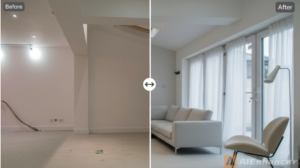
Rethinking Interior Visualization With AIEnhancer
From Real Photos to Usable Design Concepts
The process starts with something familiar: a photo of your actual room. When users first experience AI room design, the difference is immediate. Instead of imagining outcomes from mood boards or vague references, the room they know is reinterpreted directly. Walls, lighting, furniture placement, even proportions are taken into account, so the result feels tied to reality rather than floating above it.
This approach changes how people evaluate ideas. AI room design becomes less about fantasy and more about informed comparison, which is often what’s missing early in a renovation or redesign.
AI Room Design Balances Speed and Reality
Quick results can be deceptive if context disappears. AIEnhancer avoids that trap by keeping the original room structure intact. AI room design outputs arrive fast, but they still respect spatial logic. A doorway remains usable, a window still drives light, and the room doesn’t suddenly behave like a showroom that ignores daily life.
That balance makes experimentation easier. You can explore freely without the sense that the visuals are lying to you, which, frankly, happens more often than people admit.
Exploring Interior Styles Through One Consistent Lens
Modern Style That Feels Intentional
Modern interiors rely on discipline. Small misalignments feel louder when decoration is restrained. AIEnhancer handles modern spaces with a careful eye, emphasizing balance, clean geometry, and controlled contrast. Through AI room design, users can see whether modern simplicity actually complements their space or merely looks good in theory.
Industrial Design Without the Cold Edge
Industrial style often attracts people, then worries them once they think about comfort. AIEnhancer softens that edge by blending raw elements with warmth. AI room design visualizations show how metal, concrete, and open layouts can coexist with livable textures, reducing the fear that the room will feel unfinished or harsh.
Minimalist Rooms That Still Feel Lived In
Minimalism is easy to misunderstand. It isn’t emptiness; it’s clarity. AIEnhancer approaches minimalist spaces with restraint, allowing negative space to work without erasing personality. AI room design here helps users sense whether simplicity will calm their space or make it feel hollow, a distinction that’s hard to judge mentally.
Rustic Character Without Overdoing It
Rustic interiors thrive on texture and imperfection, which can overwhelm quickly. AIEnhancer uses AI room design to explore that balance, layering natural materials and warmth while keeping visual order. The results feel grounded, not theatrical, which is often the difference between a charming room and a tiring one.
Scandinavian Light as a Structural Element
Scandinavian design isn’t just a style; it’s a response to light. AIEnhancer emphasizes brightness, subtle contrast, and functional comfort. With AI room design, users can see how light interacts with surfaces in their specific room, making the style feel practical rather than copied from a catalog.
Bohemian Freedom With Hidden Structure
Bohemian interiors celebrate expression, but freedom still needs boundaries. AIEnhancer introduces layers, color, and texture while preserving an underlying structure. AI room design makes it easier to test bold combinations without crossing into visual noise, which is often the unspoken fear with this style.
Extending Design Thinking Beyond the Interior
Visualizing Exterior Identity Alongside Interiors
Interior choices rarely exist in isolation. Many people care about how their home presents itself as a whole, not just room by room. Under exterior-focused visualization, AIEnhancer also supports broader exploration through its house design feature, allowing users to imagine façades and structural styles that align with interior decisions. This connection often clarifies choices that felt uncertain when viewed separately.
Creating Consistency Without Uniformity
Consistency doesn’t mean repetition. AI room design helps users test interior aesthetics that echo exterior cues subtly, whether through materials, tone, or proportion. The goal isn’t matching everything, but creating a conversation between spaces that feels intentional rather than accidental.
Who Finds the Most Value in AIEnhancer
Homeowners Facing Decision Paralysis
Too many options can stall progress. AI room design reduces that friction by turning abstract possibilities into visible outcomes. Homeowners gain confidence not because the AI tells them what’s best, but because they can see what resonates and what doesn’t.
Designers Looking for Faster Alignment
Professional designers often use AIEnhancer as a rapid alignment tool. AI room design allows them to test directions quickly and present clearer options to clients. It doesn’t replace design thinking; it accelerates the feedback loop that good design depends on.
Real Estate Professionals Improving Visual Appeal
Empty or outdated spaces challenge buyers’ imagination. AI room design offers realistic staging concepts rooted in the actual space. This helps listings communicate potential without misleading, which builds trust while still enhancing appeal.
Why AIEnhancer Feels Practical, Not Performative
Realism as a Design Principle
Some AI tools chase spectacle. AIEnhancer prioritizes plausibility. AI room design results look achievable, which matters when decisions involve time, money, and commitment. That realism encourages users to take the visuals seriously.
A Tool That Encourages Exploration
Design rarely moves in straight lines. AIEnhancer accepts that reality. AI room design supports backtracking, comparison, and even second thoughts, all without penalty. This flexibility mirrors how people actually make decisions, imperfectly and gradually.
Lowering the Emotional Cost of Change
Change is stressful, even when it’s desired. By making outcomes visible early, AI room design lowers the emotional risk tied to redesigning a space. Users don’t feel pushed toward a single answer; they feel guided through possibilities.
Making Confident Design Choices With Less Guesswork
At its core, AIEnhancer isn’t about replacing taste or expertise. It’s about reducing uncertainty. AI room design gives form to ideas before they become commitments, allowing decisions to mature visually instead of remaining abstract. The result is a design process that feels calmer, clearer, and more human, even though it’s powered by AI.


 Blog8 months ago
[PPT] Human Reproduction Class 12 Notes
- Blog8 months ago
Contribution of Indian Phycologists (4 Famous Algologist)
- Blog8 months ago
PG TRB Botany Study Material PDF Free Download
- Blog8 months ago
Cell The Unit of Life Complete Notes | Class 11 & NEET Free Notes
 Blog8 months ago
[PPT] The living world Class 11 Notes
- Blog8 months ago
Plasma Membrane Structure and Functions | Free Biology Notes
- Blog8 months ago
Julus General Characteristics | Free Biology Notes
- Blog8 months ago
Classification of Algae By Fritsch (11 Classes of Algae)